
Fishermen Wellness: Grip Strength

I was talking to a fisherman once and he said, "This might be weird but I think photos of hands are cool." (Or something like that.) Fishermen's hands, specifically, of course. Hands say a lot about a person. A fisherman very often has calloused hands. Depending on what they did that day, they might be covered in grease with dark finger nails. Maybe they are paint splattered from painting buoys. Or there's a finger wrapped in electrical tape. And why is that a lot of the old guys have such massive mitts?
The hands, for a fisherman, are also one of their most important tools. For this reason, their grip strength is also incredibly strong.
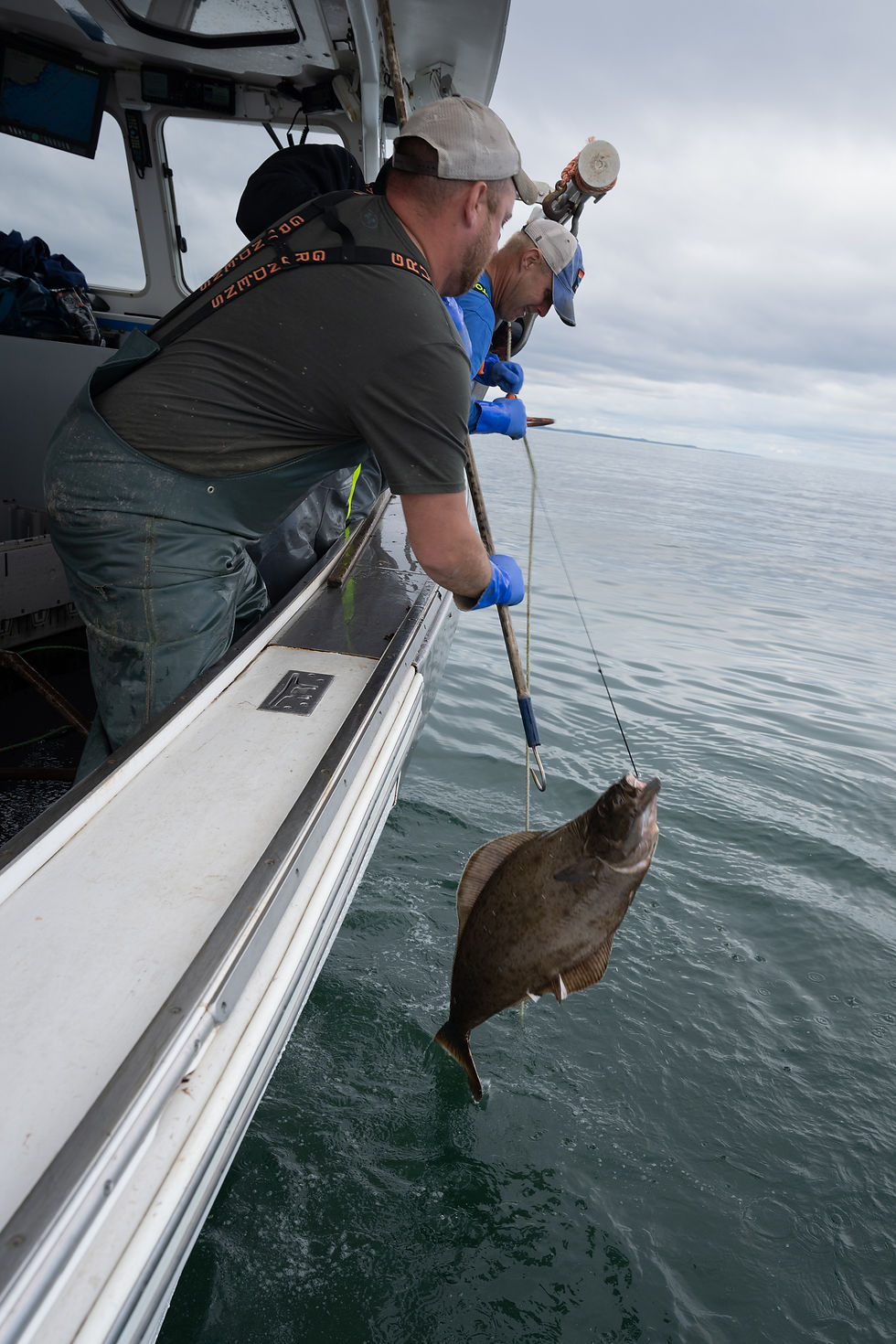
Fishermen have a strong grip because they regularly deal with awkward and heavy fishing gear, like nets, lines, and traps.
Grip strength is your ability to generate force with your hand and forearm — the squeezing, grasping, and holding that everything you do depends on when you're fishing. It is not just about how hard you can squeeze. It is about how long you can maintain a functional grip under load, when your forearms are already tired and your hands are cold and wet. That is grip endurance, and it is just as important for fishermen to have grip endurance as it is to have grip strength.
The research on tactical athletes (i.e. military, firefighters, first responders) consistently finds that grip endurance is one of the most reliable early indicators of how the body is actually holding up under physical stress. When it starts to decline, injury risk goes up across the board.
Everything in commercial fishing runs through your hands. Hauling traps, hanging on to nets, managing lines under load, squeezing a bander, and pulling yourself around a pitching deck.
Even building traps requires grip when you're bending wire and squeezing hog ring pliers for hours at a stretch. That repetitive flexion and extension builds strength over time, but it also builds up stress in the tendons and muscles of the forearm that does not always have time to fully recover before the next trip.
What pain and injury feel like

A lot of fishermen push through discomfort so routinely that they stop noticing the early signals.
Here is what to pay attention to:
Forearm tightness that does not go away after a day off. Aching in the wrist or elbow, particularly on the inside or outside of the elbow where the forearm tendons attach. Numbness or tingling in the fingers, this can signal carpal tunnel or median nerve compression from repetitive gripping. Pain that radiates up the forearm when you grip or twist. Dropping things, or noticing that your grip feels unreliable at the end of the day.
Any pain that is sharp, that radiates, or that changes how you are moving is worth getting checked out. Do not push through it and hope it resolves on its own.
Here’s a simple Forearm Stretch that can help prevent pain and discomfort:

Extend your arm in front of you with your palm facing down.
Use your opposite hand to gently press up on the fingers and palm of your outstretched hand.
You should feel a stretch along the underside of your forearm and wrist.
Maintain the stretch for about 15-30 seconds, feeling a gentle pull (without any pain).
Repeat the stretch on the other arm.
You can also repeat the stretch with your palm facing up (and use your opposite hand to gently press down on the fingers and palm of your outstretched hand).
Grip strength is also a safety issue. On a moving vessel, your grip might be the only thing between you and the water. Holding on to a rail in rough weather, catching yourself on a wet deck, managing a line under sudden load — all of it depends on your hands working when you need them to.
If your hands are trying to tell you something, listen.
Work like a fisherman, recovery like an athlete.


Comments