
"It's Time to Let Young People In": A Conversation with Alex Todd on Maine's New Scallop Apprenticeship
MCFA supports measures that expand real access to Maine's fisheries for the people who intend to fish them. Access to fisheries is essential to continue the important work and the heritage of this industry, especially ensuring that people can effectively and safely enter the fishery. Recently, there has been good movement towards improving access for potential scallop fishermen.

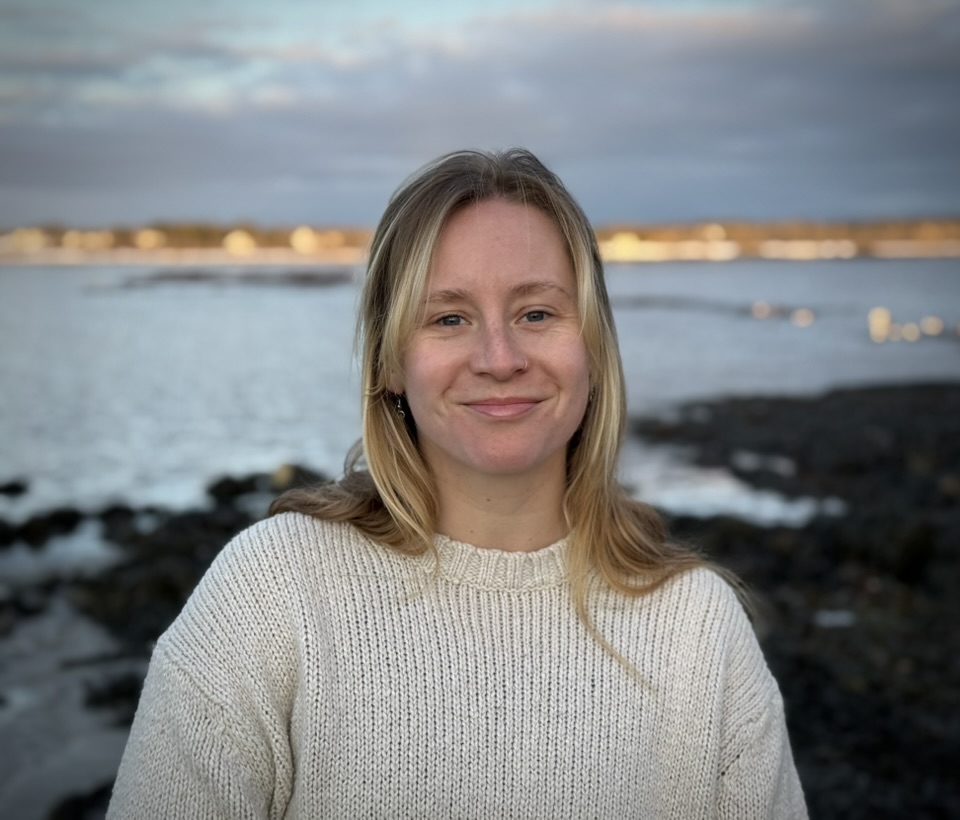
For what this new apprenticeship looks like from the helm, we sat down with Alex Todd (MCFA board chair), an eleventh-generation fisherman from Chebeague Island, a drag license holder since 1990, and a member of the Scallop Advisory Council. (The interview begins after a short summary of the apprenticeship program itself, to give context to Alex's responses.)
About the Apprenticeship
How this came about
Maine's state scallop drag fishery was closed to new entry starting in 2009. Since 2018, the only way to receive a commercial scallop license was through a lottery in which there are over a thousand entrants each year. In August 2026, DMR adopted amendments to Chapter 11 that added the requirement of an apprenticeship to the lottery. You now enter the lottery with a sponsoring captain, and if you're drawn, you earn the license by completing training and time on deck.
The proposal came from the industry. The Scallop Advisory Council (SAC), which is composed of working fishermen representing the drag and dive fisheries and different stretches of the coast, first proposed an apprenticeship to DMR around 2018. The Department declined and ran a lottery instead. The SAC kept asking and six years and a public rulemaking later, this is the result.
The apprenticeship tries to correct two problems: safety and license usage.
Safety- Under the old lottery system, you could win a drag license having never set foot on a scallop boat. Scalloping in Maine takes place in the winter, under dangerous conditions, and the fishery has seen tragedies in recent years. Ensuring those in the fishery operate safely is a key part of this apprenticeship.
License Use- DMR has issued 61 drag licenses through the lottery since 2018. 21 of them have never been used. That means that a third of lottery-issued licenses have never been fished, which directly undermines the goal of new entrants into the fishery. In 2025, 1,024 people applied for roughly eight licenses.
How the new lottery system works
To enter the lottery, you need a captain who has agreed to sponsor you. Sponsors must have held a drag license for at least five years, and can only sponsor one apprentice per season. If you're drawn in the lottery, you get an apprentice license and two scallop seasons to complete three things: a Coast Guard Drill Conductor course, an eight-hour scallop safety and operations workshop, and fifteen fishing days with your sponsor, logged and signed. If you have previously had a state license or have federal scallop landings, ten of the fifteen days can be waived. Once these three requirements are fulfilled, you're eligible to buy the drag license. If you miss the two-season window, the opportunity passes to the next alternate (extensions for certain circumstances are granted by the Commissioner).
Part One: How You Used to Get In
Q: Before any of this — the lottery, the apprenticeship — how did somebody get a state scallop license in Maine?
Alex: You called and got one. That's it. Up until 2009, as far as I remember, it was open access. If you wanted to go scalloping, you went scalloping.
Q: Is that how you got yours?
Alex: Yeah, in 1990. And my son Josh doesn't have one, because he was eight years old when they closed it. He was born in '01. I had a friend who was smart enough to get his son a license before the door shut. I wasn't thinking that far ahead. Not many of us were.
Q: What happened in 2009?
Alex: They capped it. They stopped issuing new licenses and decided it was time to stop. And then for about ten years, nothing moved. Guys retired, guys died, and nobody came in behind them. That's the way I remember it, anyway. The licenses just went away.
Part Two: Why the Lottery Wasn't Working
Q: The lottery started in 2018. What was the thinking behind it?
Alex: Right before COVID, the Scallop Advisory Council started talking about an apprenticeship program. And almost instantly the word came back from the Department that there was no apprenticeship, we're going to do a lottery. The rationale we were given was that they didn't want another waiting list like the lobster waiting list, where people are calling in every day asking when they're going to get their license. So they went with a lottery, and we stopped talking about apprenticeship for years.
Q: Who could enter that lottery?
Alex: Just about anybody with any commercial fishing license at all. Lobster license, clam license, whatever that made you eligible. So you had thousands of people putting in for a handful of licenses. It was a ticket you bought every October.
Q: What went wrong with it?
Alex: A few things. The first one is that a lot of those licenses never got used. A large percentage of them. Now, on one hand, if they're not being fished, I suppose that helps the resource. But the average age of a scalloper in this state is not young. It's time to let young people in and keep the heritage going, and handing licenses to people who never leave the dock doesn't do that.
The second thing is the clustering. It's random, so you get clusters. We've had small islands with three winners and the island right next to them with none. Same with towns. The lottery is statewide, not zone by zone, so there's nothing in it that thinks about where the licenses land.
Q: Why does that matter, if scalloping is a mobile fishery?
Alex: For me it isn't really about effort. Scalloping is mobile so people go where they need to go, to a degree. It's about the communities. A lot of these places have always had a scalloper, or a few scallopers, and now they don't, or they're one guy away from not having any.
I can tell you about Chebeague. Since around 2009, I can name at least five people off the top of my head who retired or stopped going but mostly older guys. Almost all of that happened before the lottery even started. So now I'm the only active scalloper from Chebeague. Under the new program, that means I'm the only person on the island who can sponsor anybody.
Q: And if you stopped, and Josh never got a license?
Alex: That would be it for Chebeague. Not permanently as a Chebeague kid could apprentice with somebody from Eastport and still come home and fish here. But that's the situation.
Q: There's also a safety piece to this.

Alex: There is. Under the old lottery you had people winning licenses who had never been on a scallop boat, never done anything. I had a couple of guys who won call me up and ask how to use a winch. If you're asking somebody how a winch works, you shouldn't be picking gear up over another man's head with it. And there have been accidents.
I don't think it's right to say you don't want Joe Schmo going. Anybody can go buy a federal permit and go, you can't control that. But there's a certain amount of danger in this no matter what, and lately there's been way too much of it.
Part Three: What Led to the Apprenticeship Program
Q: How did apprenticeship come back onto the table?
Alex: It was the Scallop Advisory Council that brought it forward to DMR again that we want to do the apprenticeship program. And this time the Department said, let's talk about it.
Q: What did you personally want it to look like?

Alex: No lottery at all, honestly. I wanted a sponsor requirement, and I wanted both the sponsor and
the apprentice to pay for the license, five hundred dollars apiece, something with weight to it, so you have to actually be invested to do it. I like that better than a lottery. Once you've put money on the line, you're dedicating yourself to something.
And I wanted more time. We talked about two years, sixty days, more like the lobster apprenticeship. Keep in mind Cobscook only has around thirty fishing days a year, and often fewer, so sixty days is a real commitment, though you can travel to fish, so it's not impossible.
Q: Where did the industry land?
Alex: Everybody in the room wanted the apprenticeship over a blanket lottery. Everybody.
That said, some people didn't want anybody new coming in at all. Back in 2012 we had a scallop seed set that seeded the whole state, and things were better than they'd been in a long time. The last few years, the seed hasn't been as good in a lot of places. It's trending down, areas are closing quicker. So there's a mentality out there of, why are we letting anybody in? It wasn't really a formal discussion, but it's what some people would say. But even those folks would take the apprenticeship over the lottery.
Part Four: What the Program Looks Like Going Forward
Q: Walk me through what actually changed.
Alex: The biggest thing is that you now have to have a sponsor before you can even enter the lottery. If Josh were going to do this, I'd have to sign on as his sponsor before he could put in.
That one change does a lot. Under the old system there were thousands of people eligible to enter. Now, the pool of people who qualify to be sponsors is a few hundred captains statewide and each of them can only sponsor one apprentice at a time. So you've dramatically lowered the number of people entering, and the ones who do enter are people who are actually connected to the fishery and actually want to go fishing. That's the dream, anyway.
Q: What does the apprenticeship itself require?
Alex: Fifteen fishing days with your sponsor, a Coast Guard safety course, and a scallop operations course. And if you've held a state scallop license before, or you own a boat and you've been fishing the Northern Gulf of Maine federally as your own captain, you can get ten of those fifteen days waived. So some people are only doing five days.
Q: Is fifteen days enough?
Alex: This is where I like it and don't like it. It's better than none at all, that's for sure. Fifteen days is enough for somebody to get comfortable and not get anybody hurt. But it's a lot less than what we started out talking about.
Here's the thing, though. Once you win that lottery, the license is effectively yours as long as you finish the program. You're not waiting years for a turn. So at that point, other than safety, what's the argument for making it two years and sixty days? I understand how they got there.
Q: What's the piece of this you value most?
Alex: The sponsor. It's not just the fifteen days, it's that you don't have to sponsor somebody you think is going to go kill themselves or somebody else. You can say no. You don't have to sponsor somebody your own age if what you want is to bring a young person along.
That's the part that lets fishermen shape where this fishery goes. That hasn't existed before.
Q: Anything you're watching for?
Alex: Whether we still see clusters. If we revisit this in a couple of years and the licenses still aren't distributing evenly, we should try to fix that. At one point we talked about tying entries to the areas where licenses retired. But on Chebeague, there aren't five licenses left to go out. That door's closed here.
Q: You've also raised concerns about whether applicants get enough runway to prepare.
Alex: That's been my worry. The lottery has typically opened around the first of October, which doesn't give somebody much time to get ready, and now you need a sponsor lined up before you can even put your name in. At our last meeting we talked about moving it earlier, to July, so people have time to prepare.
[The program applies to the current lottery cycle. DMR posted the 2026 lottery in early September, open for 30 days, and prospective applicants need a sponsor identified before that window closes. DMR also moved the drill conductor course out of the pre-lottery requirements in response to public comment, specifically so the compressed timeline wouldn't disqualify otherwise-eligible applicants.]
Q: Should apprentices be young people specifically?
Alex: In theory, somebody my age can still be an apprentice. I understand why people want that. But it doesn't necessarily help the future of the fishery. I personally want to see young people get into it.
Q: Last one. There's always talk about being able to sell or hand down a license, like Massachusetts allows. Where do you come out?
Alex: It comes up at every meeting. Right now, in Maine, when somebody dies or just stops renewing, and my father is one of them, he sent his in, that license goes back to the state. He could never have passed it to Josh, and I couldn't either.
A lot of people want the Massachusetts model. But you still have to buy it, and then it's the same as land on Chebeague or anywhere else. Everybody gets money hungry, it becomes somebody's retirement, and it ends up sold to some rich kid from away. I don't think that gets us where we want to go.
What This Means, and What Comes Next
The apprenticeship program is not a fix for the scallop resource. The exit-to-entry ratio still means the total number of drag licenses in Maine shrinks every year, and the council explicitly declined to adjust that ratio during this transition.
This apprenticeship program is controversial. The public record on this rulemaking includes fishermen who see the sponsor requirement as the fishery formalizing who's already on the inside and DMR has said plainly that the first version of this program won't be the last.
For seventeen years, entry into Maine's scallop drag fishery was decided either by a closed door or by a random draw. Fishermen had no role in it. A license could land on a person who had never set foot on a scallop boat, and there was no mechanism for the fleet to pass along what it knew. As Alex put it, you don't have to sponsor someone you think is going to get himself or somebody else hurt, and you don't have to sponsor someone your own age if what you want is to bring a young person into the fishery. Fifteen days is not a long apprenticeship. But fifteen days on deck with a captain is a different kind of entry than a letter in the mail that guarantees some safety training.
Check DMR's scallop licensing page for the application. You'll need your sponsor's name in hand, so start that conversation as soon as you can. And if this year isn't your year, get your Drill Conductor certificate anyway as it doesn't expire, and it's one of the three requirements already met whenever you do apply.
Thanks to Alex Todd for his time and candor, and to Melissa Smith at the Maine Department of Marine Resources for walking us through the details of the program.


Comments