
The Next 50 Years: Reflecting on the Magnuson-Stevens Act at 50

This April marks a monumental milestone for our oceans and the people who make their living upon them: the 50th anniversary of the Magnuson-Stevens Fishery Conservation and Management Act (MSA).
Passed on April 13, 1976, the MSA was a declaration of American maritime sovereignty. It reclaimed our waters by establishing the 200-mile Exclusive Economic Zone (EEZ) and created a unique, constituent-driven regional council system that remains the global gold standard for sustainable fisheries management. Today, thanks to decades of science-based rebuilding, at least 50 U.S. fish stocks have been successfully restored, supporting over 2.1 million jobs and generating $300 billion in sales.
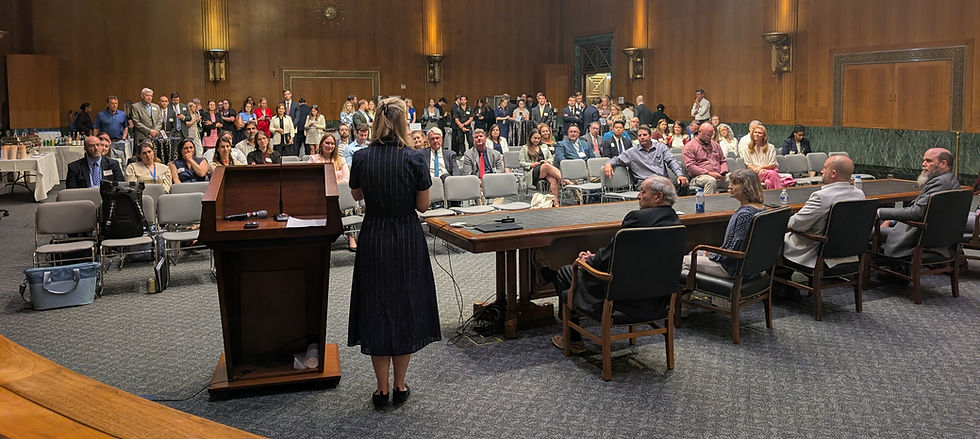
Last week, I had the honor of moderating a panel in the Dirksen Senate Office Building to discuss what the next 50 years of this legacy should look like.
Hosted by the Fishing Communities Coalition (FCC), the conversation brought together the fishermen from around the country (and our very own Barton Seaver to talk about the seafood side of the story)—to bridge the gap between policy and the realities that fishermen see on the water. While the first 50 years were focused on the fish, the next 50 years need to better incorporate the needs of the fishermen, the fishing businesses, and the fishing communities.

After the panel, we had a seafood reception with seafood from around the country including monkfish (Maine Coast Monkfish Stew), skate (Cape Cod’s Provençal Fish Stew), lobster (Thank you Luke’s Lobster for the donation!), scallops from Maine’s Downeast Dayboat, black cod and halibut from Alaska, red snapper from the Gulf of America, mid-Atlantic oysters, and Carolina shrimp.
Restaurant Associates, the caterer for the Senate, served a wide variety of dishes showing off regional flavors, and no one left the event with an empty stomach.
Fishermen on the panel included:
Bill Amaru, a lifelong Cape Cod fisherman with over 50 years of experience, took us back to the "Wild West" days before the MSA, when foreign fleets loomed just 12 miles offshore. His perspective reminds us how far we’ve come—and with his son and grandson fishing with him, he also shared his hopes for the future.
Linda Behnken of the Alaska Longline Fishermen's Association shared the grit required for long days on the water in the North Pacific. She remains a fierce advocate for the next generation, reminding us that sustainable stocks are irrelevant to fishermen without a workforce to harvest them.
Lance Nacio, an innovator in the US shrimp industry, highlighted the front-line battle against seafood fraud. He spoke passionately about the need for the American Seafood Competitiveness Act of 2026, which would expand USDA loan and grant access to fishermen.
Joe Letourneau brought the high-stakes reality of small-boat offshore fishing to life. He shared the amount of work that goes into not only getting offshore and catching the fish, but also what it takes to get a high-quality ike jime product into the marketplace. Joe also emphasized the critical pressure on our shrinking working waterfronts—reminding us that the coast is the only place you can launch a boat, and if we lose that infrastructure, we lose the industry.
From the other side of the dock:
Barton Seaver, one of our country's leading voices on sustainable seafood (and an MCFA board member), tied it all together by connecting the fishermen’s labor to the American plate. He encouraged us to think about seafood integration into our food systems not just as a commodity, but as a pillar in addressing our nation’s health and food security challenges.

Ben Martens (me!) introducing panelists during the 50th celebration of the Magnuson-Stevens Act
At the end of the panel, we were joined by Senator Murkowski (AK), who shared some of her thoughts on the impact of the MSA and the need to continue the work in fighting for our nation’s fishermen.
In addition to Senator Murkowski, we were joined by Senator King (whose team secured the room and helped spearhead the event), Senator Collins, Representative Westerman, Representative Hageman, Representative Huffman, Representative Hoyle, Representative Bonamici, Representative Carbajal, and Representative Ezell.
Looking Ahead
As we look toward the MSA's centennial, MCFA’s focus for impact through our participation with the Fishing Communities Coalition is clear. We are advocating for:
Workforce Development: Investing in the Young Fishermen’s Development Act (YFDA).
Infrastructure: Protecting working waterfronts from storm damage and development.
Seafood as Food: Supporting the newly introduced American Seafood Competitiveness Act to give fishermen the same financial tools as land-based farmers.
Investing in Cooperative Science: Collaborating with scientists, fishermen, and stakeholders to collect and utilize relevant data.
The first 50 years of MSA focused on our fisheries; now, without rolling backwards on stewardship and conservation, we must also ensure that we sustain our people and communities. I left the Dirksen building more convinced than ever that if we invest in our fishermen, innovation, science, and management equally, the next 50 years will bring an abundance of American seafood to the plate and will allow vibrant fishing communities to flourish throughout the US.


Comments